








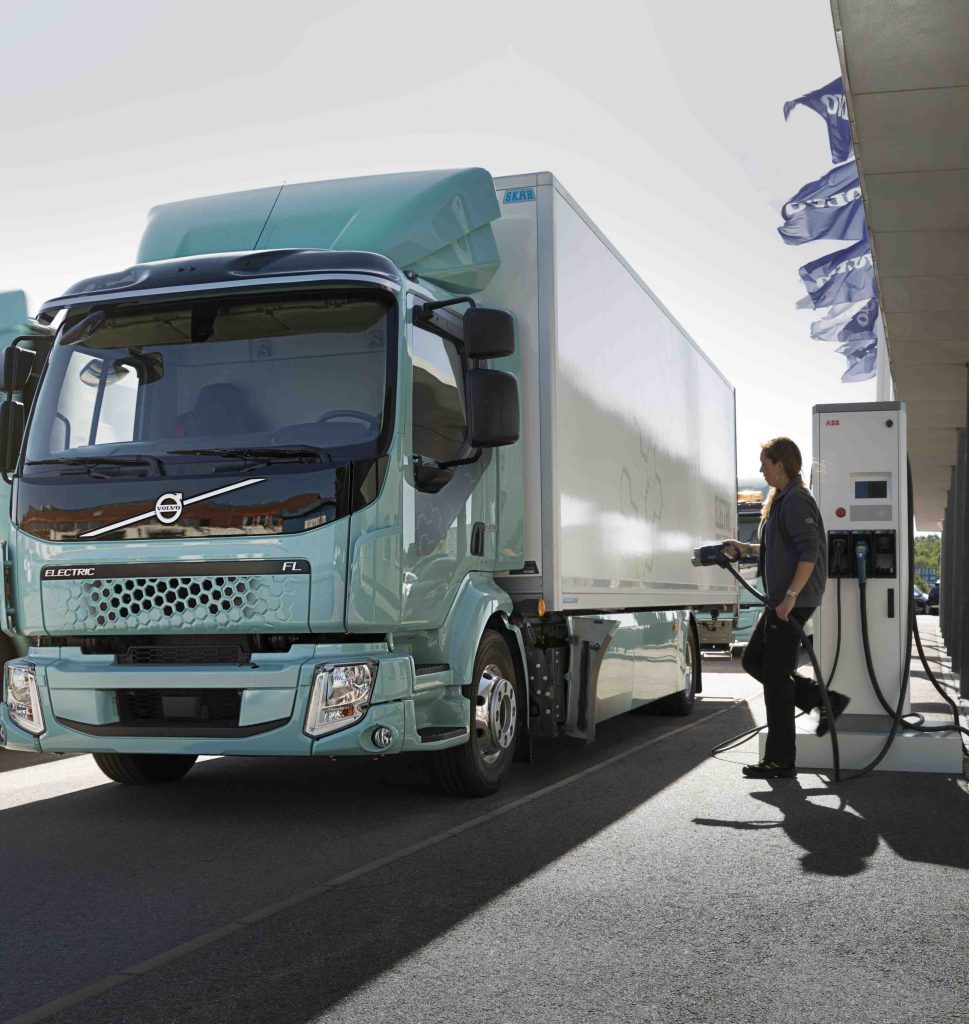
Gothenburg, Sweden: Swedish grocer ICA Sweden and Volvo Trucks are working together to electrify as much of the retailer’s fleet as possible.
In the long term, cooperation will extend to other areas to reduce the environmental impact of goods transport. Initially the companies will identify possible routes for electric vehicles.
“We have an important responsibility to reduce the environmental impact of our goods transport. Our cooperation with Volvo Trucks will enable us to increase the pace of the developments that will reduce our transport emissions. This is fully in line with ICA’s sustainability policy,” Anders Svensson, chief executive, ICA Sweden, said.
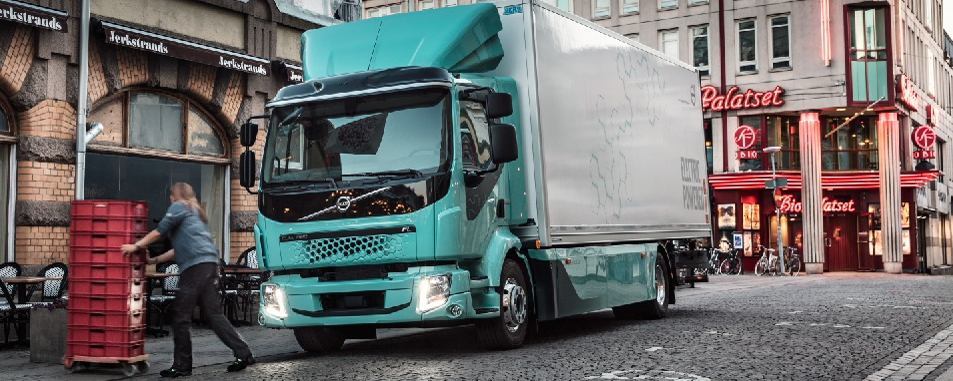
The cooperation covers ICA’s road transport within Sweden in city centres and on longer intercity routes. Electric transport will use existing technologies as well as jointly testing new technologies.
“Together we can speed up the introduction of efficient, fossil-free transport solutions. The cooperation will give us a better understanding of how electric trucks can quickly reduce carbon dioxide emissions from large transport flows,” Roger Alm, president, Volvo Trucks, said.
ICA’s goal is for the group’s Swedish subsidiary to have a fossil-free road transport system by 2030 at the latest. Since 2019, Volvo Trucks has been making and selling electric trucks for city deliveries.
ICA has some 1300 stores and a 36% market share in Sweden. The business operates with independent ICA retailers who own and run their own stores, which makes it possible for them to tailor concepts and offers to local demand.
Volvo goes electric
Next year, European operators will be able to order all-electric versions of Volvo’s heavy-duty trucks. Volvo is testing electric heavy-duty Volvo FH, Volvo FM and Volvo FMX trucks, which will be used for regional transport and urban construction operations.
These trucks will have a gross combination weight of up to 44 tonnes. Depending on the battery configuration the range could be up to 300km.
Sales will begin next year and volume production will start in 2022. This means that from 2021 onwards Volvo Trucks will sell a complete range of battery-electric trucks in Europe for distribution, refuse, regional transport and urban construction operations.
“By rapidly increasing the number of heavy-duty electric trucks, we want to help our customers and transport buyers to achieve their ambitious sustainability goals. We’re determined to continue driving our industry towards a sustainable future,” Roger Alm, president, Volvo Trucks said.
Volvo Trucks started manufacturing the Volvo FL Electric and Volvo FE Electric in 2019. These are electric trucks intended for city distribution and refuse operations, primarily in Europe.
In North America, sales of the Volvo VNR Electric, a truck for regional transport, will start on December 3, 2020.
Electric vehicles for demanding and heavy long-haul operations will follow in this decade. These will be battery-electric and fuel cell electric trucks with a longer range. Volvo Trucks aims to start selling electric trucks powered by hydrogen fuel cells in the second half of this decade. Volvo Trucks’ objective is for its entire product range to be fossil-free by 2040.
“To reduce the impact of transport on the climate, we need to make a swift transition from fossil fuels to alternatives such as electricity. But the conditions for making this shift, and consequently the pace of the transition, vary dramatically across different hauliers and markets, depending on many variables such as financial incentives, access to charging infrastructure and type of transport operations,” Alm said.
Volvo says most transport companies will change to electric operation in stages. In practice, many will have a mixed fleet of trucks powered by different fuels during a transition period.
“Our chassis are designed to be independent of the driveline used. Our customers can choose to buy several Volvo trucks of the same model, with the only difference being that some are electric and others are powered by gas or diesel.
“As regards product characteristics, such as the driver’s environment, reliability and safety, all our vehicles meet the same high standards. Drivers should feel familiar with their vehicles and be able to operate them safely and efficiently regardless of the fuel used,” Alm said.
From Volvo Trucks’ perspective, the transition to more sustainable transport is largely about making the shift as smooth as possible for haulage operators, so that they can begin to adjust. The solutions offered must be fossil-free and allow hauliers to achieve the necessary levels of profitability and productivity.
“Our primary task is to ease the transition to electrified vehicles. We’re doing this by offering holistic solutions that include route planning, correctly specified vehicles, charging equipment, financing and services.
“The long-term security that we and our global network of dealers and service workshops provide our customers with will be more important than ever,” Alm said.